Showing posts with label mead. Show all posts

Thursday, 15 March 2012

Vanilla Fig Mead

We had a couple of empty growlers from the Niagara College teaching brewery and some left over honey after starting our apple mead. Naturally this can only mean that its time for a small batch of mead! This time we are going to expirement with a vanilla-fig flavour combination.

Ingredients
Directions
  1. Place the honey into a hot water bath so that it will be easier to pour.
  2. Bring 1.5 liters of water to a boil, and let it boil for 5 minutes.
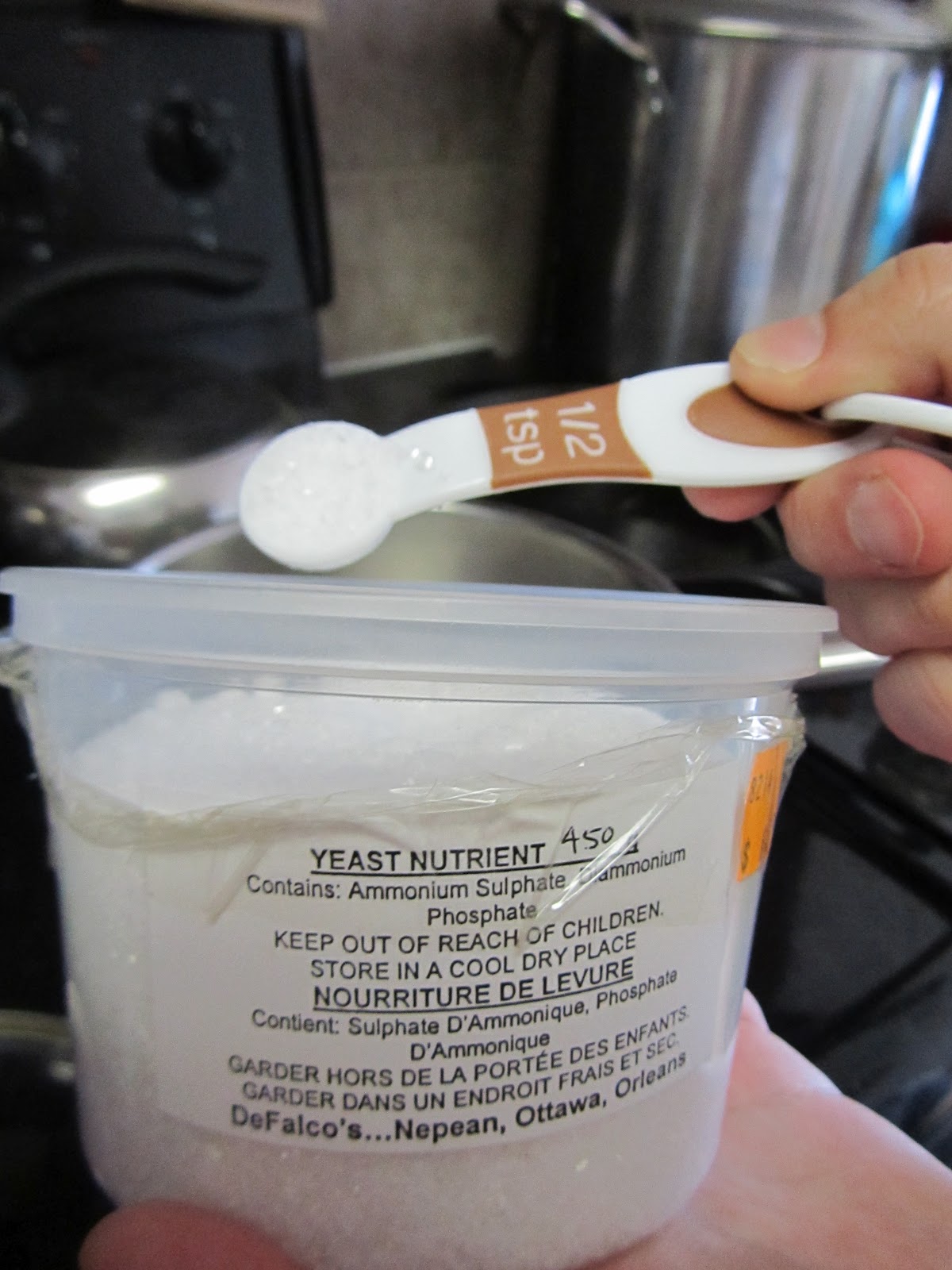
  3. Add 1/2 teaspoon yeast nutrient to the boiled water.
  4. Add 1/2 teaspoon acid blend to the boiled water.
  5. Pour the honey into the boiled water and mix thoroughly to create the must.
  6. Place the must into a cold water bath to cool it down.
  7. Take a hydrometer reading.
  8. Pour the must into the fermenter and pitch the yeast.
  9. Top off the fermenter with water (boiled and cooled), and then place the airlock on top.
Notes
  • Original gravity: 1.030. This value is low because the sample was taken from the top of the must and after cooling it down a lot of the honey settled to the bottom.
  • Once the main fermentation is complete in about a month, we will transfer the mead into a secondary along with some vanilla and figs.

Tuesday, 21 February 2012

Do you mead it or do you want it?

We were patiently waiting for our first mead to age and to satiate our excitement about how it was blossoming in the bottle we decided to brew up another batch. Only this time we spiced things up! With cinnomen, cloves and nutmeg! We also diluted the honey with apple juice, so technically we brewed up a cyser instead of a mead.

Ingredients
  • 3 liters of President's Choice unfiltered apple cider
  • 1 Kilogram of honey (Local Bee from Puslinch Ontario)
  • 1 Teaspoon yeast nutrient
  • 1/2 teaspoon pectin enzyme
  • 1 packet yeast (Lalvin K1-V1116) 5 grams
Directions
  1. Place the honey into a hot water bath so that it will be easier to pour.
  2. Add about 2 liters of the apple cider to a pot and heat it up. Do not let it come to a boil.
  3. Add 1 teaspoon yeast nutrient and 1/2 teaspoon pectin enzyme to the pot of hot apple cider.
  4. Pour the 1 Kilogram of honey into the apple cider and mix everything thoroughly together.
  5. Cool the must using a cold water bath.
  6. Take a sample of the must and perform a hydrometer test.
  7. Once the must has cooled to around 25 degrees Celsius add it to the primary fermenter. 
  8. Pitch the yeast and top off the fermenter with the remaining apple cider.
  9. Seal the fermneter with a stopper and airlock.
Notes
  • Original gravity: 1.128
  • We did not add any spices initially but plan to add them when we rack the mead into the secondary fermenter in about a month.
  • The initial fermentation was very vigorous and we had to remove the stopper and airlock. About an hour after pitching the yeast it was bubbling over the top of the fermenter. We left it open for a couple of hours for things to settle down before placing the stopper and airlock back.

Sunday, 5 February 2012

A bees-ness proposition

Last month we bottled our mead and we are hoping that this month we will start off another batch. Andrew, a co-worker of mine, suggested getting honey from two of his high-school friends, Ruben and Dave, that have started their own honey business. After inquiring a bit more about this honey (where does it come from? how much does it cost? what's it called? where can i buy it? ) he invited me out for lunch with one of the honey-makers for a planned hand-off.

The honey, called Local Bee, is from Puslinch, Ontario. Its an endeavour that the duo started just for personal satisfaction. They produce a few hundred bottles during spring and have recently added a nice clean label to the bottles which gives it a great look. The honey can be bought in stores in the West end of the city near Parkdale, all walking distance from his house.


Its not about the money Ruben said, its the sheer enjoyment of taking part in this process. A process that they managed from start to finish. All profits made from the honey are given to a food bank a the end of the year.

One person's profession is often another person's personal pastime. For Ruben and Dave its honey, but for us its home-brewing. We can't wait to try this honey out in our next batch of mead!