Wednesday, 16 May 2012

Grapefruit Graffiti Great Pale Ale

About a month ago we headed out to Bar Volo to enjoy a glass of a Barrel Aged Sour IPA created by Cameron's. We have always enjoyed a nice IPA and recently we have started to explore the world of sour beers.


It all started when we were in San Francisco this past winter and we visited a great beer bar called Zeitgeist. After chatting with our very knowledgeable bartender we decided to follow his advice and finish the evening with a sour beer. We were blown away with its distinctive taste, and although not something you'd drink pint after pint, it was definitely a style to seek out. In fact, we have inquired about sour beers at some local bars around town.


About a month ago we also noticed a new offering at the LCOB: Panil, a sour beer from Italy. We instantly picked up a bottle with fond memories of the sour we had in SF. Unfortunately we were a bit disappointed with this offering and had this been our only sampling of this style we would have likely given up on sours. Fortunately, memories of the SF beer still lingered and so when we saw the Barrel Aged Sour IPA on offering at Bar Volo, we immediately set out on our quest.

The Barrel Aged Sour IPA did not disappointed. There was a lot going on in the glass that we ordered and all of it was good. However, after about halfway through the glass the taste started to hone in onto something very specific: Grapefruit.

A friend of ours, whose taste in beer we really respect, is always pushing IPAs with a fruit undertone. He has mentioned peach and grapefruit as being excellent flavours of an IPA. With his tastes in mind and our excellent experience with the Barrel Aged Sour IPA, we propose the Grapefruit Graffiti GPA.

Ingredients
  • 1 pound Cara Aroma malt
  • 6 pounds Briess Amber Dry Malt Extract (DME)
  • 20 Liters of Toronto tap water
  • 3.5 oz Columbus hop pellets
  • 5.5 oz Cascade hop pellets
  • 1 oz Irish moss
  • 6 grams Morgan's Ale Yeast
  • Rind of 1 grapefruit
Directions
  1. In a large stock pot bring 13 liters of water up to 70 degrees Celsius.
  2. While the water is coming up to temperature crush the Cara Aroma grains using a rolling pin and place it into a hop bag.
  3. Steep the hop bag full of crushed Cara Aroma in the stock pot for 30 minutes once it has reached 70 degrees Celsius.
  4. After 30 minutes remove the Cara Aroma malt from the pot and raise the temperature to bring the wort to a boil.
  5. Once the pot has reached a boil add 0.7 oz Columbus hop and 0.3 oz Cascade hop (in a hop bag).
  6. After 30 minutes add 3 pounds of the DME.
  7. After 15 minutes add 0.6 oz Columbus hop and 1.4 oz Cascade hop (in a hop bag)
  8. After 10 minutes add  0.3 oz Columbus hop and 0.7 oz Cascade hop (in a hop bag). Also add 0.5 oz Irish moss and half of the grapefruit rind.
  9. After 5 minutes remove the pot from the heat and place in a cold water bath.
  10. Once the wort has reach below 27 degrees Celsius pour the wort into the primary fermenter.
  11. Fill the pot with 7 liters of water and bring to a boil.
  12. Once it has reached a boil add 0.7 oz Columbus hop and 0.3 oz Cascade hop (in a hop bag).
  13. After 30 minutes add 3 pounds of the DME.
  14. After 15 minutes add 0.6 oz Columbus hop and 1.4 oz Cascade hop (in a hop bag)
  15. After 10 minutes add 0.3 oz Columbus hop and 0.7 Cascade hop (in a hop bag). Also add 0.5 oz Irish moss and the rest of the grapefruit rind.
  16. After 5 minutes remove the pot from the head and place in a cold water bath.
  17. Once the wort has reach 25 degrees Celsius pour the wort into the fermenter. Mixed all of the wort in the fermenter together vigorously.
  18. Take a hydrometer test of the wort in the fermenter.
  19. Add the yeast and 0.7 oz Cascade and 0.3 oz Columbus hops (in a hop bag) to dry hop the beer.
  20. Seal the fermenter.

Thursday, 10 May 2012

Let There Be Hops!


It all started with our trip to California in December of 2011. While touring around The Golden State we paid a visit to a BevMo! and to our beer-loving Canadian eyes for a few moments it felt like we were in heaven. Drinks as far as the eye could see, prices so low that it hurt to look directly at them and THE SELECTION! Mind-blowing!

Their beer selection in particular was quite astounding. We probably spent around 30 mins just looking around at that store until we finally bought something, carefully selected, to bring back with us. These were four bottles of beer, single-hopped and identically brewed except for the type of hop that was used.

These beers were getting us excited and finally we got together with some friends last month and tried them out. It was intended to be a learning experience so we would get an idea of the type of flavor, bitterness and aroma each hops contributes to. We did some learning and a lot of drinking.

With the fresh taste of different hops in our mouth we decided to have another brew day at our urban brewery. Our last few attempts at an IPA had been pretty calculated. We had a single hop that we were working with and each time we would try to narrow down what was missing, make a small change and see the results.

This time we laughed in the face of the Scientific Method and went in very brave and bold direction. This was primarily inspired by our hop-tasting night and the availability of two new hops at the homebrew supply store: Fuggle and Columbus

Ingredients
  • 1 pound Caramel 40L malt
  • 4 pounds Briess golden light DME
  • 2 pounds Briess pilsen light DME
  • 1pound Briess amber DME
  • 23 liters Toronto tap water
  • 3 oz fuggle hop pellets
  • 3 oz cascade hop pellets
  • 3 oz columbus hop pellets
  • 1 oz Irish moss
  • 7 grams Cooper's ale yeast.
All our supplies
Directions
  1. In a large stock pot bring 15 liters of water to 70 degrees Celsius.


  2. While the water is coming up to temperature, measure out the Caramel malt and crush it with a rolling pin. Place the crushed grain into a hop bag and set aside.
  3. Add the hop bag with the crushed Caramel into the stock pot once the water has reached 70 degrees Celsius. Let the malt steep in the pot for 30 minutes and watch the temperature to keep it close to 70 degrees.


  4. After 30 minutes remove the Caramel and bring the wort to a boil.
  5. Once the stock pot has reached a boil add 0.9 oz Columbus hop, 0.45 oz cascade hop and 0.15 oz fuggle hop.
  6. After 30 minutes add all of the DME to the stock pot.
  7. After 15 minutes add 0.45 oz Columbus hop, 0.60 oz cascade hop and 0.45 oz fuggle hop.
  8. After 10 minutes add 0.15 oz Columbus hop, 0.45 oz cascade hop and 0.9 oz fuggle hop. Also add 1 oz Irish moss.


  9. After 5 minutes remove the stock pot from the heat and place in an ice water bath to cool down.
  10. Once the wort has dropped below 27 degrees Celsius pour it into the fermenter.
  11. Add 8 liters of water to the stock pot and bring it to a boil
  12. Once the water has reached a boil add 1 oz Columbus hop, 0.45 oz cascade hop and 0.1 oz fuggle hop. Set aside 0.15 oz Columbus hop, 0.45 oz cascade hop and 0.9 oz fuggle hop that will be used for dry-hopping.
  13. After 15 minutes add the remaining hops to the boiling water.
  14. After 15 minutes remove the stock pot from the heat and place into a cold water bath.
  15. Once the water is around 25 degrees Celsius add to the wort in the primary fermenter. Stir together everything together.
  16. Take a hydrometer test.
  17. Add the hops set aside for dry hopping and yeast. Seal the fermenter.

    Notes
  • Original gravity: 1.061
  • There was some issue with scale so the hop measurements are most likely not accurate.

Thursday, 15 March 2012

Vanilla Fig Mead

We had a couple of empty growlers from the Niagara College teaching brewery and some left over honey after starting our apple mead. Naturally this can only mean that its time for a small batch of mead! This time we are going to expirement with a vanilla-fig flavour combination.

Ingredients
Directions
  1. Place the honey into a hot water bath so that it will be easier to pour.
  2. Bring 1.5 liters of water to a boil, and let it boil for 5 minutes.
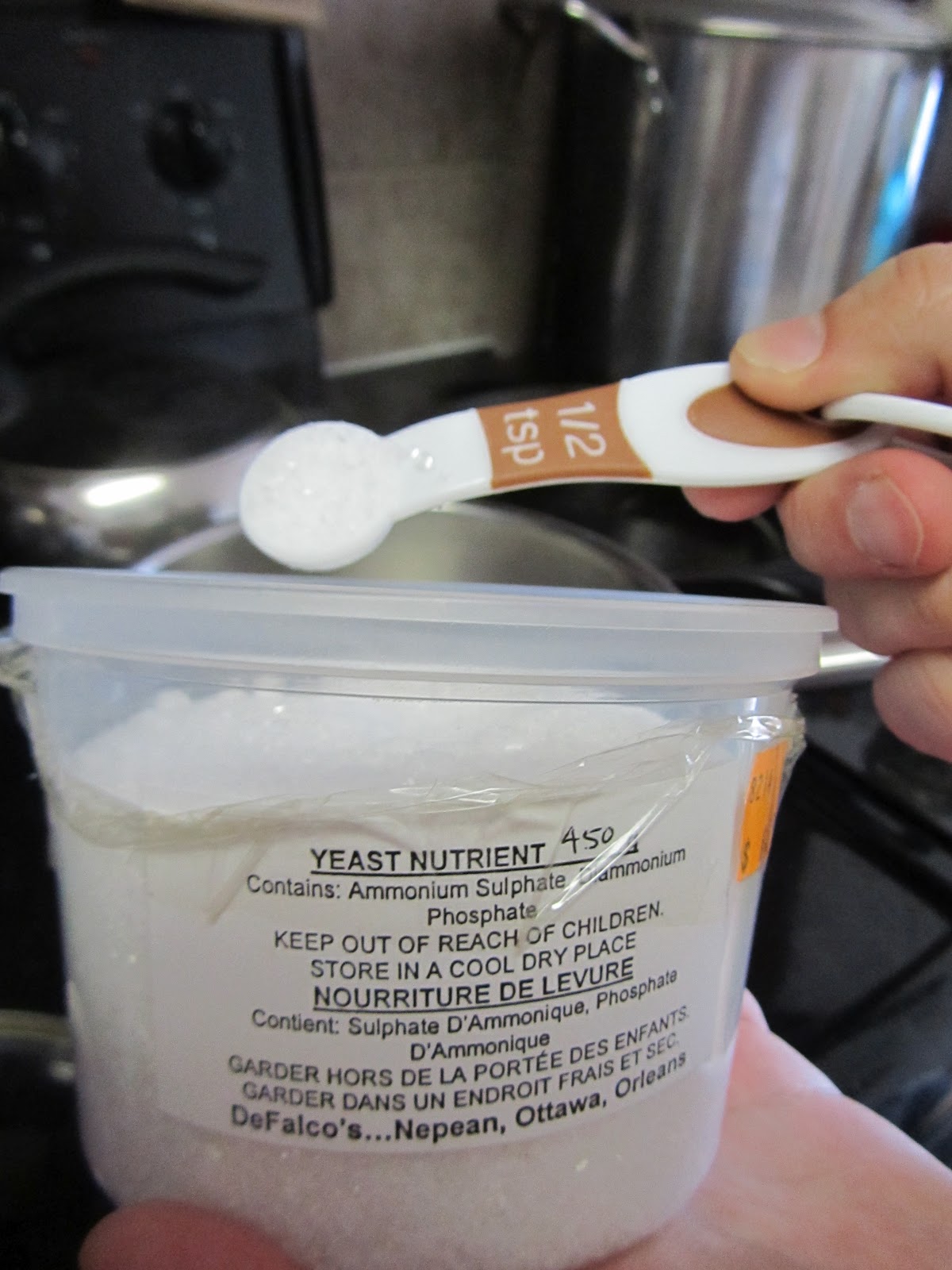
  3. Add 1/2 teaspoon yeast nutrient to the boiled water.
  4. Add 1/2 teaspoon acid blend to the boiled water.
  5. Pour the honey into the boiled water and mix thoroughly to create the must.
  6. Place the must into a cold water bath to cool it down.
  7. Take a hydrometer reading.
  8. Pour the must into the fermenter and pitch the yeast.
  9. Top off the fermenter with water (boiled and cooled), and then place the airlock on top.
Notes
  • Original gravity: 1.030. This value is low because the sample was taken from the top of the must and after cooling it down a lot of the honey settled to the bottom.
  • Once the main fermentation is complete in about a month, we will transfer the mead into a secondary along with some vanilla and figs.

Sunday, 26 February 2012

Graffiti Alley Bottled!

We are extremely excited about our latest batch of Graffiti Alley that we bottled today. It is a beautiful golden colour with a very satisfying bitter structure layered on top of a wonderful, delicate malty profile. In a word: Amazing! Our move from using amber malts to pilsen seems to have been in the right direction. However, the beer will still undergo some more changes for the next couple of weeks as it carbonates in the bottle. We can only sit back and wait with anticipation until we can crack open that first bottle and taste the final result.

Ingredients
  • 1 cup Toronto tap water.
  • 60 grams corn sugar.
Directions
  1. Bring 1 cup of tap water to a boil and add 60 grams of corn sugar. Boil them together for 5 minutes.
  2. Take a hydrometer reading of the final beer.
  3. Fill the siphon with the sugar water and add any remaining into the bottling bucket. Siphon from the fermenter to the bottling bucket.
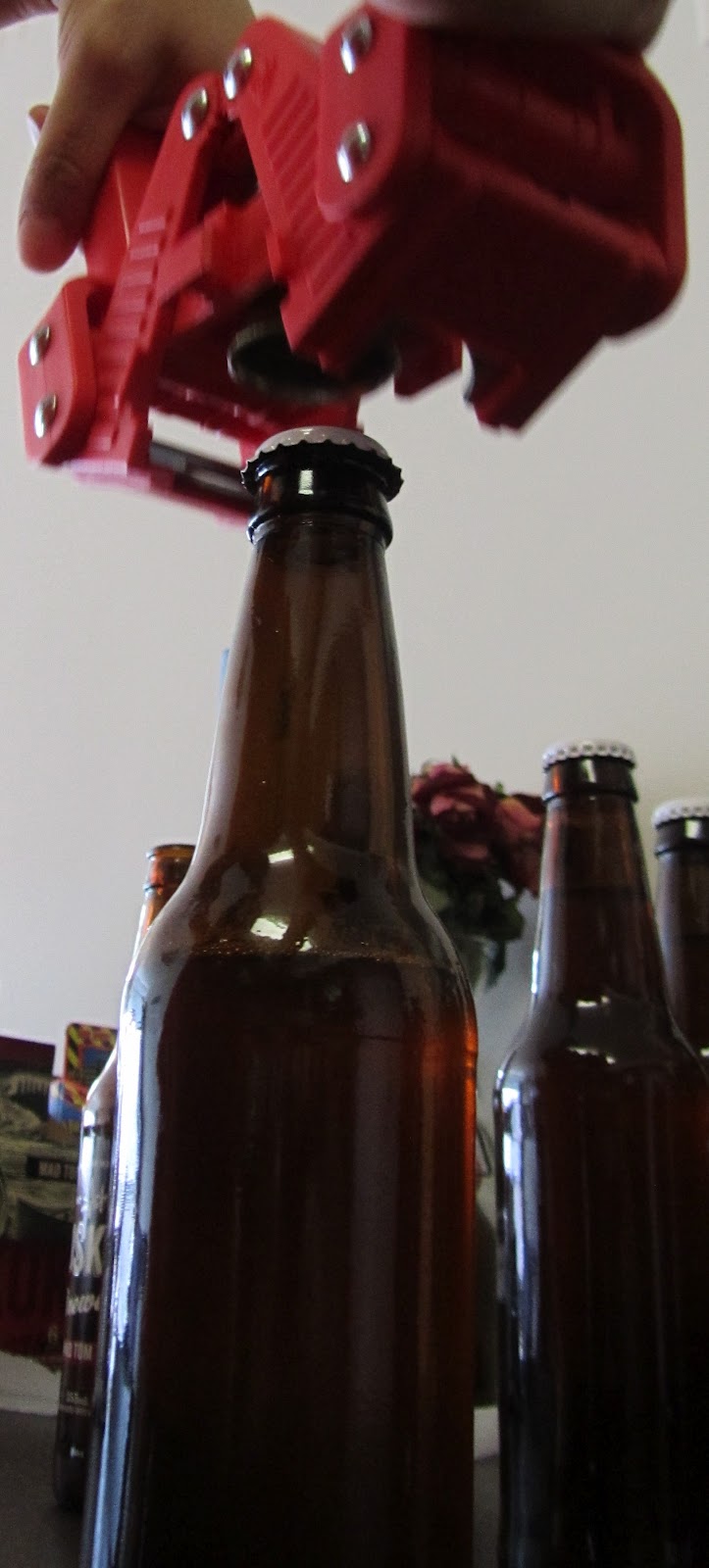
  4. Fill the bottles and cap them. The bottles will need to be stores at room temperature for at least 2 weeks to properly carbonate.
Notes
  • Final gravity: 1.008 (~5.8% ABV)
  • Quantity made: 27 x 355ml (9.59 liters)
  • We opened up a bottle of Muskoka Brewery Mad Tom IPA, one of our favourite beers, to do a side by side comparison. Since Mad Tom has been dried hopped, it has a much richer up front hop aroma. This is definitely something we'll attempt in a future batch. Surprisingly our beer lost most of its bitterness and had a light sweet taste when sampled after Muskoka's brew.

Tuesday, 21 February 2012

Do you mead it or do you want it?

We were patiently waiting for our first mead to age and to satiate our excitement about how it was blossoming in the bottle we decided to brew up another batch. Only this time we spiced things up! With cinnomen, cloves and nutmeg! We also diluted the honey with apple juice, so technically we brewed up a cyser instead of a mead.

Ingredients
  • 3 liters of President's Choice unfiltered apple cider
  • 1 Kilogram of honey (Local Bee from Puslinch Ontario)
  • 1 Teaspoon yeast nutrient
  • 1/2 teaspoon pectin enzyme
  • 1 packet yeast (Lalvin K1-V1116) 5 grams
Directions
  1. Place the honey into a hot water bath so that it will be easier to pour.
  2. Add about 2 liters of the apple cider to a pot and heat it up. Do not let it come to a boil.
  3. Add 1 teaspoon yeast nutrient and 1/2 teaspoon pectin enzyme to the pot of hot apple cider.
  4. Pour the 1 Kilogram of honey into the apple cider and mix everything thoroughly together.
  5. Cool the must using a cold water bath.
  6. Take a sample of the must and perform a hydrometer test.
  7. Once the must has cooled to around 25 degrees Celsius add it to the primary fermenter. 
  8. Pitch the yeast and top off the fermenter with the remaining apple cider.
  9. Seal the fermneter with a stopper and airlock.
Notes
  • Original gravity: 1.128
  • We did not add any spices initially but plan to add them when we rack the mead into the secondary fermenter in about a month.
  • The initial fermentation was very vigorous and we had to remove the stopper and airlock. About an hour after pitching the yeast it was bubbling over the top of the fermenter. We left it open for a couple of hours for things to settle down before placing the stopper and airlock back.

Monday, 13 February 2012

Polishing Off the Pale Ale

"It's a near masterpiece!" he exclaimed while sipping his third bottle of Graffiti Alley IPA. High praise from our friend who normally politely drinks his bottle, but then quickly moves onto something different. The beer I brought to my office were also doing down by the 2 bottles instead of the regular half or thirds. Our last recipe was a great stride in the right direction but onwards we must push forward.

Since our last batch was really good we decided to tweak things very slightly. We want to experiment with the type of dry malt extract (DME) and how they affect the final beer flavour. This next batch will be a repeat of the last one but using Pilsen light DME instead of the amber.

Ingredients
  • 1/2 pounds Caramel 40L malt
  • 4 pounds Briess Pilsen light dry malt extract (DME)
  • 13 liters Toronto tap water
  • 2.9 oz Cascade hop pellets
  • 7 grams Cooper's ale yeast

Directions
  1. In a large stock pot bring the 13 liters of water to 71 degrees Celsius.
  2. While the water is coming up to temperate measure out 1/2 pound of the Caramel malt. Add it to a zip-lock back and crush the grain using a rolling pin. Place the crushed grain into a hop bag and set aside.
  3. Measure out three quantities of Cascade hops: 1oz, 1oz and .9 oz. Ideally we would have liked 3 groups of 1oz each, but we only ended up with .9 oz for the last group. Place these hops into hop bags and set aside. We only have 3 hop bags in total, so we reuse the one with the crushed grains closer to when we add the final hop addition.
  4. Add the hop bag with the crushed Caramel malt once the water has reached 71 degrees Celsius. Steep the malt for 30 minutes and watch the temperature so that it stays close to 71 degrees.
  5. Remove the crushed Caramel malt and bring the stock pot to a boil. Keep the crushed grain because it can be reused in cooking.
  6. Once the stock pot has reached a boil add one of 1oz hopped filled hop bags. This is the start of the boil.
  7. Add the 4 pounds of DME 30 minutes into the boil. Mix thoroughly to remove any clumps.
  8. Add the other 1oz hopped filled hop bag 45 minutes into the boil.
  9. Add the final 0.9oz hopped filled hop bag 55 minutes into the boil.
  10. Remove the stockpot from the heat after it has been boiling for 60 minutes (starting from step 6). Place the stockpot into a cold water bath to cool down quickly. While cooling mix the contents vigourously to oxygenate it.
  11. Once the wort has reached 25 degrees Celsius pour it into the fermenter. Sprinkle the yeast on top and cap the fermenter with an airlock.
Notes
  • Original gravity: 1.052
  • After brewing we found out that one of our hop bags had a hole in it. This means there was a bunch of hop sediment floating around in our wort. We expect that most of it will fall to the bottom of the fermenter, but we may need to find some method to filter the beer before bottling in two weeks.

Sunday, 5 February 2012

A bees-ness proposition

Last month we bottled our mead and we are hoping that this month we will start off another batch. Andrew, a co-worker of mine, suggested getting honey from two of his high-school friends, Ruben and Dave, that have started their own honey business. After inquiring a bit more about this honey (where does it come from? how much does it cost? what's it called? where can i buy it? ) he invited me out for lunch with one of the honey-makers for a planned hand-off.

The honey, called Local Bee, is from Puslinch, Ontario. Its an endeavour that the duo started just for personal satisfaction. They produce a few hundred bottles during spring and have recently added a nice clean label to the bottles which gives it a great look. The honey can be bought in stores in the West end of the city near Parkdale, all walking distance from his house.


Its not about the money Ruben said, its the sheer enjoyment of taking part in this process. A process that they managed from start to finish. All profits made from the honey are given to a food bank a the end of the year.

One person's profession is often another person's personal pastime. For Ruben and Dave its honey, but for us its home-brewing. We can't wait to try this honey out in our next batch of mead!